Recurrent Shoulder Dislocation
The Shoulder

Normal Shoulder
- Ligaments which hold the bones together
- A rim of cartilage called the labrum which deepens the socket
- Muscles which keep the shoulder blade and joint in the correct position when moving or using the arm

Complications
Pain levels felt after surgery vary depending on the type of surgery, individual pain thresholds, nature of the problem for which surgery was done and various other factors.
Stiffness after shoulder surgery is not uncommon and occurs as a result of pre-existing pathology, surgical scarring and prolonged post-operative protection in asling. It is very uncommon to see significant stiffness at 1 year after arthroscopic shoulder surgery.
Bleeding during or after surgery. It is common to have oozing from the arthroscopic wound ports after surgery as the blood-stained sterile water used during surgery drains out.
Infection of the wound is rare (less than 0.2%). Early diagnosis of post-operative infection has a significantly better outcome. After your operation you should contact the ward and your GP immediately if you get a temperature, notice pus in your wound, feel unwell, or if your wound becomes red, sore or unsightly.
Unsightly scarring of the skin (less than 1%). Most surgical scars have disappeared to a thin pale line by one year after surgery. If you are concerned about your scar you must discuss it with your surgeon or therapist, as there are many treatments to improve scar.
Nerve Injury is rare (less than 0.5%), with most shoulder operations, but some larger operations have a higher risk and this will be discussed with you by your surgeon.
Vascular injury is again very rare (less than 5%).
Anaesthetic related complications such as sickness and nausea are relatively common. Heart, lung or neurological problems are much rarer at less than 1 person in 1,000
Recurrent dislocation or instability risk after arthroscopic surgery is approximately 5-10%. The risk is higher in young males, those who play contact sports, and non-compliance with post-operative rehabilitation.
Recurrent dislocation or instability after Latarjet surgery is approximately 2-5%. The risks of infection, nerve injury and stiffness are higher than in arthroscopic surgery.
Revision surgery
Following revision surgery the outcomes and results are generally less favourable compared to primary surgery. Similarly complication rates and risks are usually higher in revision.
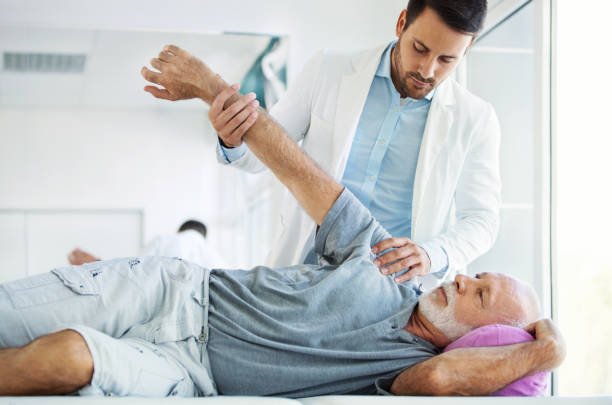
Dislocated Shoulder
When the first dislocation or subluxation occurs the ligaments and labrum are often damaged in the shoulder. This may lead to persistent symptoms of instability.
Alternatives to surgery
The decision to proceed with an operation is an individual choice between every patient and their Surgeon. You will only be offered an operation if your Surgeon believes that this will help improve your symptoms. Very few operations are essential and all have a degree of risk. Some patients can learn to manage their symptoms with painkillers and improve function with muscle strengthening and physiotherapy.
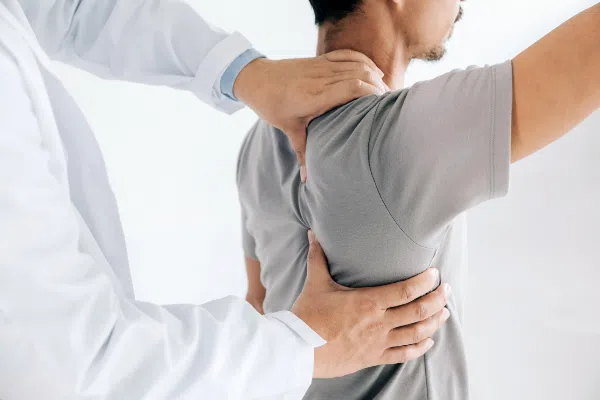

About your shoulder stabilisation operation
The operation aims to tighten and/or repair the over-stretched and damaged ligaments, rim of cartilage and shape of socket. Different types of operation can achieve this. Your surgical options will be discussed in clinic with our Orthopaedic team and your post-operative rehabilitation will depend on the specific operation.
Frequently Asked Questions
Do I need to do exercise ?
What do I do about the wound?
Your wound will have a shower-proof dressing on when you are discharged. You will be given extra dressings to take home with you. You may shower or wash with the dressing in place, but do not run the shower directly over the operated shoulder, or soak it in the
bath. Pat the area dry, do not rub. The stitches/clips will need to be removed at your GP practice or your hospital follow up appointment. The nursing staff will advise you when this can happen; it is usually between 10–14 days after your operation. Avoid using spray deodorant, talcum powder or perfumes on or near the wound until it is fully healed. Please discuss any queries you may have with the nurses on the ward.
Interscalene Block You may be offered a nerve block for the surgery, known as an interscalene block. The Anaesthetist will discuss this in detail with you before the surgery.The benefits of an interscalene block are:
* Reduced risk of nausea and vomiting and sedation
* Earlier ability to leave hospital
* Early intake of food and drink
* Excellent pain control
* Lighter general anaesthetic with speedier recovery from the anaesthetic
* Less chance of an overnight stay at the hospitalPainkillersYou will be given painkillers (either as tablets or injections) to help reduce the discomfort whilst you are in hospital.
A one-week prescription for continued pain medication will be
given to you for your discharge home. Keep the pain under control by using medication regularly at first. It is important to keep the pain to a minimum, as this will enable you to move the shoulder joint and begin the exercises you will be given by the Physiotherapist.
If you require further medication after these are finished, please visit your General Practitioner (GP).
Do I need to wear a Sling ?
When do I return to the outpatient clinic?
Yes, your arm will be immobilised in a sling for a period of time. The time and type of sling will vary according tThis is usually arranged for approximately 3 weeks after you are discharged from hospital, to check on your progress. Appointments are made after this as necessary.o the procedure. This is to protect the surgery during the early phases of healing and to make your arm more comfortable. A Nurse or Physiotherapist will show you how to take the sling on and off safely. If you are lying on your back to sleep, you may find placing a thin pillow or rolled towel under your elbow helpful.
Are there things that I should avoid doing?
How am I likely to progress?
- Sling on, no movement of shoulder except for exercises
- Regaining everyday movements
- Regaining strength with movementUnder guidance, you will be able to increase your activities, using your arm away from
When can I drive ?
When can I return to work?
You may be off work between 2–12 weeks, depending on the type of job you have, which arm has been operated on and if you need to drive. If you are involved in lifting, overhead activities or manual work you will not be able to do these for 8–12 weeks. Please discuss any queries with the surgical team
Guide to daily activities ?
Some difficulties are quite common, particularly in the early stages when you are wearing the sling and when you first start to take the sling off. If necessary, an Occupational Therapist can help advise you. Below are listed some common difficulties with guides which may help.
Getting on and off seats – raising the height can help e.g. extra cushion.
Hair care and washing yourself – long handled brushes and sponges can help.
Dressing – wear loose clothing with front fastening or which you can slip over your head. Also remember to dress your operated arm first and undress your operated arm last.
Eating – a non-slip mat can help when one-handed. Use your operated arm once it is out of the sling as you feel able.Household tasks/cooking – light tasks can be started once your arm is out of the sling. To begin with you may find it more comfortable keeping your elbow into your side.
When can I participate in leisure activities?